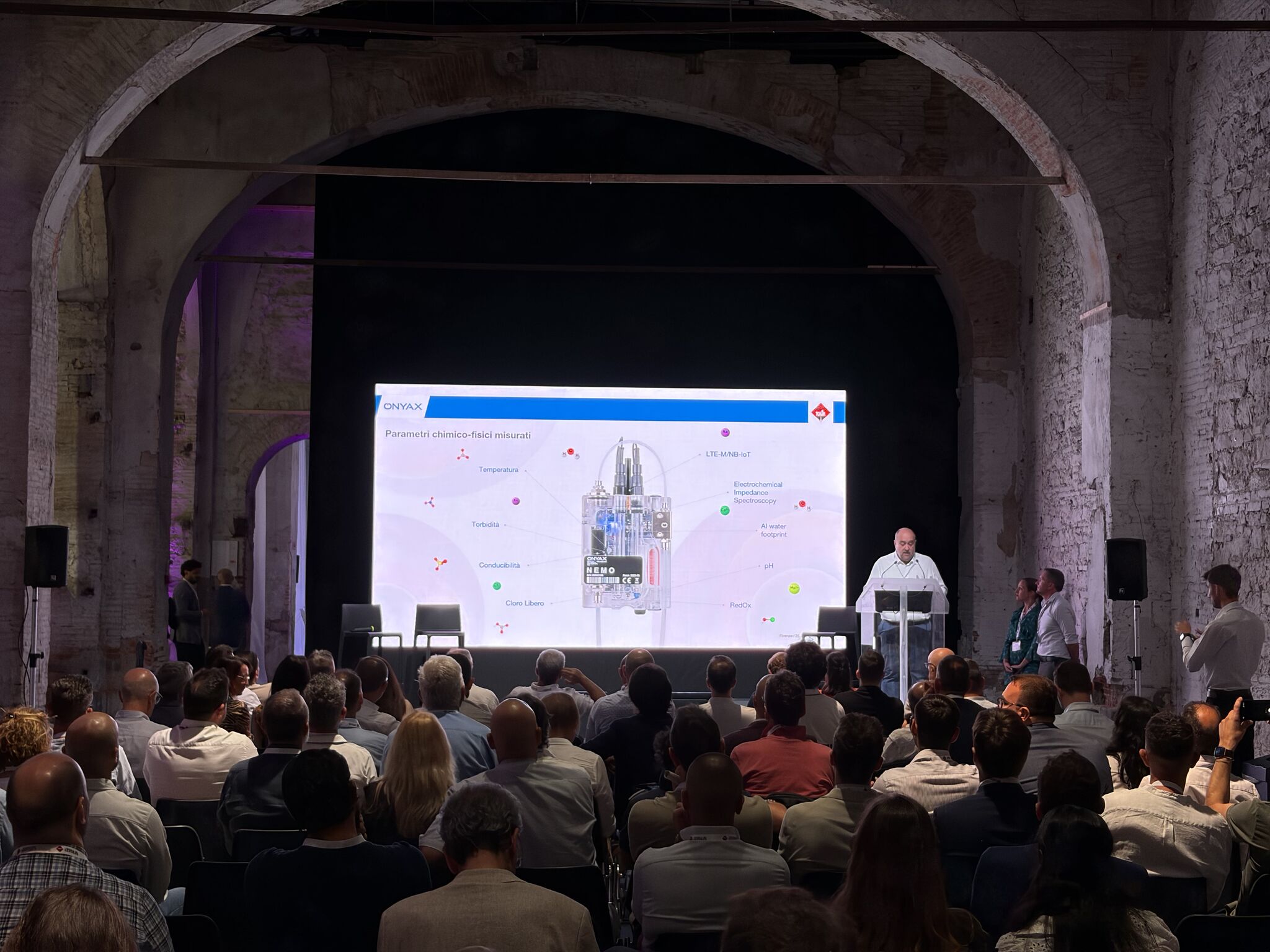
The digital transformation of water networks today ranges from consumption metering and leakage reduction to the monitoring of water quality throughout the distribution network. Within this context, Onyax and the Department of Chemistry at the University of Pavia are collaborating on the development of NEMO, an IoT micro-laboratory for continuous water quality monitoring, currently deployed by the water utility Acquedotto del Fiora.
The solution
Acquedotto del Fiora manages the Integrated Water Service across 55 municipalities in the provinces of Grosseto and Siena, serving a vast and complex territory. In recent years, the utility has embarked on a major technological innovation programme aimed at improving network efficiency and reducing water losses, based on large-scale smart meter reading, network district metering and the adoption of intelligent monitoring systems.
Among its most innovative initiatives is the NEMO project, an IoT solution deployed at the utility’s “Water Houses” (Casine dell’Acqua), which are already equipped with advanced telemetry and supervision infrastructure. The device enables high-frequency analyses to be carried out directly within the network, moving beyond the traditional approach based on periodic sampling followed by laboratory testing.
NEMO integrates multi-parameter sensors, NB-IoT connectivity and a dedicated cloud platform to support the utility’s operational and decision-making activities, enabling real-time monitoring of parameters such as pH, free chlorine, turbidity, conductivity, oxidation-reduction potential (ORP) and temperature.
The benefits of the NEMO project
Initial findings from the pilot project confirm the value of continuous monitoring as a means of increasing both the frequency and coverage of water quality checks compared with traditional methods, providing greater visibility into changes in water quality parameters over time.
The automation of measurement activities also reduces the need for manual interventions, optimising the use of operational resources and improving the efficiency of monitoring processes at the utility’s Water Houses. Full integration with the company’s digital platforms also makes it possible to maximise the value of the information collected, turning data into a practical tool for supporting service management while promoting a sustainable, citizen-focused approach.
The contribution of the University of Pavia
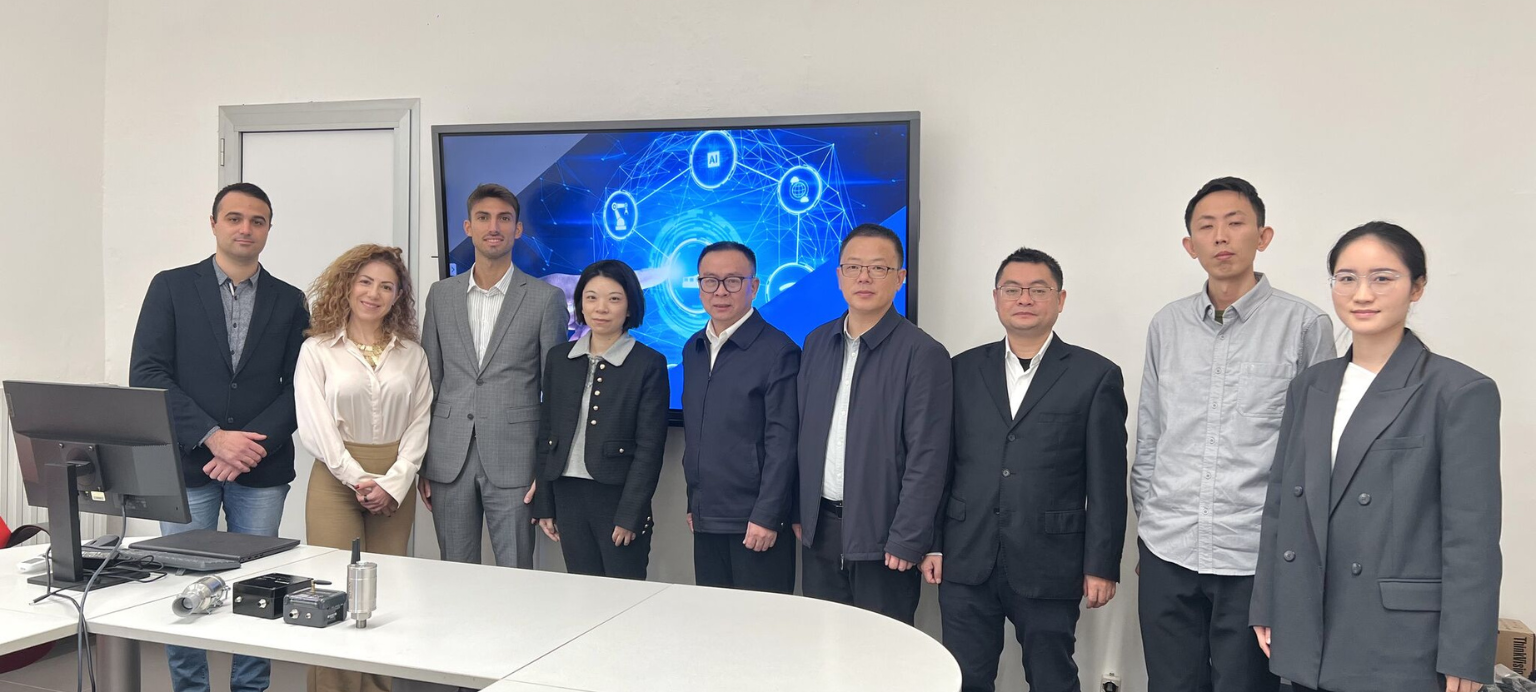
The collaboration with the Department of Chemistry at the University of Pavia aims to further enhance the system’s performance through Artificial Intelligence models and advanced data analysis techniques. The objectives include improving analytical processes, enabling remote diagnostics of anomalies and defining the “water fingerprint”, namely the physicochemical signature that characterises water at a specific point in the distribution network.
By correlating the data collected by NEMO with the known composition of the distributed water, the system can identify significant variations, support water quality monitoring across the service area and promptly flag situations requiring further investigation or targeted intervention.
This approach opens up new opportunities for increasingly intelligent, sustainable and data-driven management of water networks.